
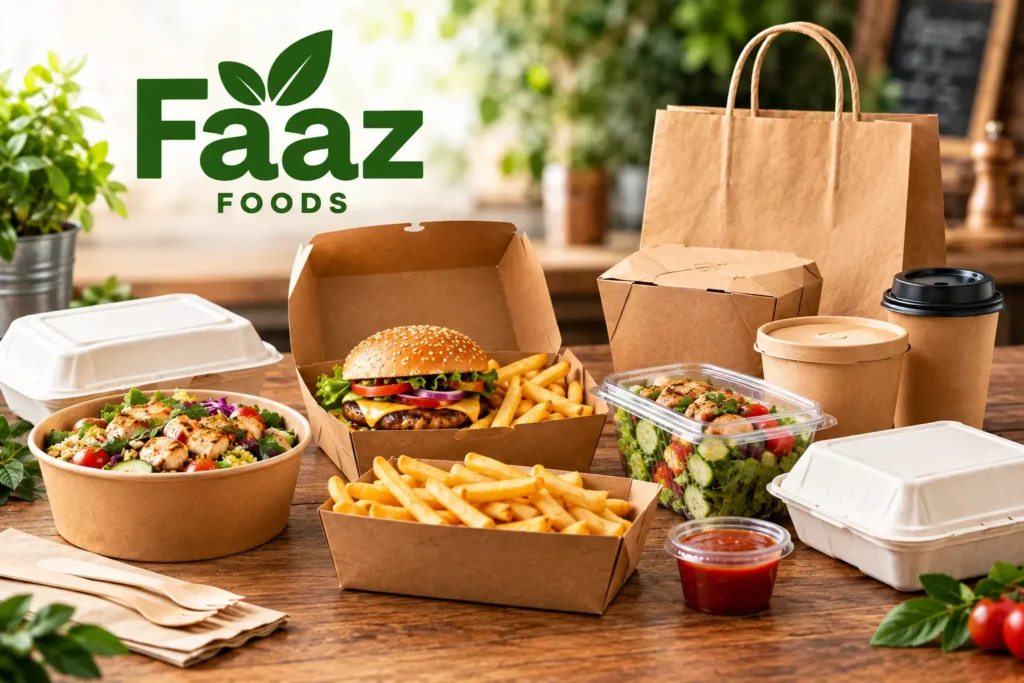
Food packaging makes or breaks the first impression a customer gets — soggy fries, a leaking curry, or a crushed box can undo good cooking before it’s even tasted. With the UK food-to-go market heading past £25 billion, getting it right matters more than ever. This guide covers how to pick the right food packaging boxes for what you’re serving, where eco-friendly or biodegradable food packaging makes sense, and what to check before ordering from a food packaging supplier in the UK.
Why Choosing the Right Food Packaging Matters
Packaging does more than hold food. It keeps meals safe, fresh and tidy from the kitchen to the customer, and it makes storing, stacking and carrying easier on a busy shift. A central kitchen may need strong, stackable boxes for deliveries to several sites, while a takeaway may prefer lightweight containers that are easy to handle and reheat.
Cost matters, but the cheapest box isn’t always the best deal. Packaging that leaks or breaks leads to wasted food and unhappy customers. Good packaging helps you in a few clear ways:
- Less food waste and fewer complaints
- Meals that look the way the kitchen intended
- Smoother, quicker packing during busy periods
- A better first impression of your brand
Once you see why packaging matters, the next question is how to keep food in good condition on the way out the door.
Keeping Food Fresh, Hot and Presentable
The right packaging helps meals arrive warm, fresh and presentable. Hot meals such as curries, rice and pasta need containers that hold heat. Fried foods need ventilation, so steam doesn’t turn the coating soft. Sauces and oils need secure, leak-resistant lids.
Size matters here too. A container that is too big lets food slide around, while an overfilled one spoils the look of the meal. If you handle lots of orders at once, choose packaging that stacks, stores and travels well.
Heat and freshness are only half the story, though. Leaks and steam cause most of the complaints.
Preventing Leaks, Spills and Soggy Food
Trapped steam is what ruins a good portion of chips. Hot food sweats as it cools, and a lid sealed too tightly turns that steam into water. Crispy food then goes soft fast.
The fix depends on the dish. Fried food needs somewhere for steam to escape, while curries and saucy food need a proper seal that won’t give way on the journey. A few habits help:
- Don’t overfill the box. A lid that won’t shut properly traps steam and spills sauce.
- Let hot food release its steam for a moment before closing the lid.
- Keep sauce away from crispy items, or pack it in a small separate pot.
- Think about delivery time. The longer the trip, the more the packaging has to cope with.
Getting these details right also shapes how customers feel about the whole order.
Improving the Customer Experience
Customers judge the meal before they taste it. They notice whether the box opened easily, whether it leaked and whether it looked like someone cared. A few points carry more weight than the rest:
- Easy to open and hold: this matters most for anyone eating with one hand or juggling a delivery bag on the doorstep.
- Right temperature: hot food should stay hot and cold food should stay cold, or the rest of the experience suffers.
- Sustainable choices: many customers notice and remember which businesses made the effort.
With the basics covered, let’s look at the packaging types available.
Types of Food Packaging for Takeaways and Restaurants
Food doesn’t all travel the same way. A curry needs a proper seal, while a sandwich just needs to stay dry. Knowing the difference before you stock up saves money.
Food Packaging Boxes
Most takeaways start here. Boxes protect food on the way out, and the outside gives you room for a logo. Sizes run from single meals to full catering orders, so match the size to what you actually serve.
- Keep rice, sides and sauces apart so nothing runs together
- Hold presentation together from kitchen to customer
- Make portion control easier
Plastic Food Containers
Anything with sauce, broth or oil works well in plastic. Round tubs suit soups and pasta, while rectangular ones suit mains and sides because the flat base doesn’t tip in a bag. Choose a compartment tub when parts of a meal shouldn’t touch.
- Microwave-safe in many cases, so customers can reheat in the same box (check the product label)
- Leak-resistant for longer delivery journeys
- Durable enough to survive a bumpy ride
Best for: rice bowls, curry and rice, soup noodles, laksa and stir-fried noodles. Clear PET versions suit cold dishes such as salads, fruit and desserts.
Kraft Paper and Cardboard Packaging
Kraft packaging is light, takes branding well and suits dry food you eat with your hands. It also keeps fried food crisper than plastic, because steam can escape. Keep wet food out of it, as it won’t hold up.
- Grease-resistant, so oil doesn’t soak straight through
- Vented versions reduce condensation
- Clean, presentable finish for branding
Best for: fried chicken, chips, wraps, burgers, pastries and cakes. A windowed box works well for bakery items. If you sell wings, our peri peri wings are a good example of a food that needs a vented box.
Foil Food Containers
Foil is the choice for oven-to-table food or anything that needs to stay hot for a while.
- Strong heat retention
- Sturdy enough for large or catering-size portions
- Oven-safe, so it can go straight back in if needed
Best for: curries, stews, roasts and catering trays.
Bagasse and Biodegradable Food Packaging
Bagasse is made from sugarcane fibre that would otherwise be thrown away. It handles heat, copes with greasy food without a plastic lining and breaks down once it has done its job. It costs a little more than plastic or cardboard, but many businesses trying to cut plastic see that as a fair trade.
- Rigid enough to hold hot food without collapsing
- Supports an eco-friendly image that customers notice
Best for: rice dishes, meal boxes and general takeaway containers.
Clamshell Containers and Takeaway Boxes
A clamshell has a hinged lid that locks in heat and freshness without needing anything extra on top. It also stacks well, which helps when a late delivery order is piling up.
- Separates ingredients so flavours and textures don’t bleed together
- Improves presentation for meals with several parts
- Stacks neatly for storage
Best for: meal prep, catering orders and multi-part meals.
Quick Comparison of Packaging Materials
| Material | What it does well | Best for | Trade-off |
|---|---|---|---|
| PP plastic | Leak-resistant, handles heat | Hot meals, saucy dishes, meal prep | Not biodegradable |
| PET plastic | Clear, resists moisture | Cold food, salads, desserts | Not suited to hot food |
| PLA (plant-based) | Clear, compostable | Salads, fresh produce, cold meals | Limited heat resistance |
| Kraft paper and cardboard | Light, takes branding, lets steam out | Dry food, fried food, bakery | Softens with moisture or oil |
| Aluminium foil | Holds heat, sturdy, oven-safe | Large portions, roasts, curries | Not microwave-safe |
| Bagasse | Rigid, suits hot food, compostable | Rice dishes, meal boxes | Costs more, limited with liquids |
| Clamshell | Locks in heat, stacks well | Multi-part meals, catering | Bulkier to store |
How to Choose Food Packaging for Different Foods
Material matters, but matching it to the dish matters more. Use this table as a starting point, then read the notes below it.
| Food | Best packaging | Why it works | Watch out for |
|---|---|---|---|
| Burgers, fried chicken, chips | Ventilated kraft box | Vents let steam out, so the coating stays crisp | Plain cardboard traps steam |
| Curries, rice, saucy dishes | Leak-proof PP tub, foil for big portions | Strong seal holds sauce and heat | Thin or unsealed boxes leak |
| Fish and chips | Ventilated kraft box | Handles grease and airflow together | Sealed boxes ruin the crunch |
| Wraps and noodles | PP tub for soup noodles, coated paper box for dry noodles and wraps | Matches protection to the food | Plain paper leaks with soup |
Burgers, Fried Chicken and Chips
These foods share one problem, which is trapped steam. A grease-resistant kraft box handles the oil, but ventilation does the real work. Vent holes let steam out, so the coating stays crisp instead of going soft within minutes.
Curries, Rice and Saucy Foods
Anything swimming in sauce needs a proper seal first. Leak-resistant PP tubs hold both liquid and heat during delivery. For bigger catering portions, foil containers do the same job and cope better with weight and volume.
Fish and Chips
The challenge is the same as fried chicken, since grease and steam both need managing. A ventilated kraft box stops oil soaking through and lets enough air in that the batter stays crisp.
Wraps, Noodles and Other Takeaway Foods
This group splits in two. Soup noodles and laksa need a secure, sealed PP tub. Dry noodles, wraps and other handheld food only need a light, grease-resistant paper box, which avoids adding bulk to the order.
Once you know what you need, the next step is buying it sensibly.
Buying Food Packaging Wholesale in the UK
Buying in bulk usually costs less per box, but only if you order the right products in the right amounts. Too much stock ties up cash and space. Too little leaves you short on a busy Friday. You can see what we stock in our packaging range.
What to Look for in Food Packaging Suppliers
A good supplier does more than sell boxes. Before you order, check these points:
- Food-safe products: ask for food-contact safety documents, not just a promise.
- Proof for eco claims: for compostable items, ask for a certificate such as EN13432.
- Clear materials: the supplier should tell you what each product is made of and how to dispose of it.
- Stock and delivery times: find out how fast in-stock items arrive and how long custom orders take.
- A full range: boxes, cups, lids and bags from one supplier save time and avoid mismatched sizes.
- Samples: a supplier happy to send samples is usually confident in the product.
- UK compliance: ask whether the products meet current UK rules.
Choosing the Right Pack Sizes
Stock two or three sizes that cover your whole menu, because more than that clutters your store room. Then keep these points in mind:
- Match each size to the portion. Too big wastes money and makes food look small, while too small causes spills.
- Check the case quantity. A case of 500 isn’t cheap if you only use 100 a week.
- Think about storage. Flat-pack boxes take up far less space than rigid ones.
- Keep hot and cold items separate, as they usually need different packaging.
Buying Packaging Based on Your Order Volume
How much to buy depends on how much you sell and how much space you have.
- Small or new business: order small quantities and see what sells.
- Steady business: track what you use for a month, then order that amount every few weeks.
- Busy or growing business: bulk orders cost less per unit, but check your storage first.
- Seasonal peaks: order extra before busy times such as Ramadan, Eid and Christmas.
- Custom printing: printed boxes usually need larger minimum orders and a longer wait, so plan ahead.
If you order every week, a trade account makes reordering quicker.
Reducing Packaging Costs
You can cut costs without lowering quality:
- Right-size your boxes. Smaller, well-fitted packaging uses less material.
- Use fewer product types. Bigger orders of fewer items usually bring better prices.
- Buy everything from one supplier to simplify delivery and negotiation.
- Compare total cost, not just price per box. A cheap box that leaks costs more in remade meals.
- Order samples first. A failed bulk order is the most expensive mistake.
- Skip extra sleeves and liners unless the food needs them.
- Store stock dry and flat so it doesn’t get damaged before use.
Cost is only one side of the decision. More customers now ask what their packaging is made of, so let’s cover eco options.
Eco Friendly and Biodegradable Food Packaging
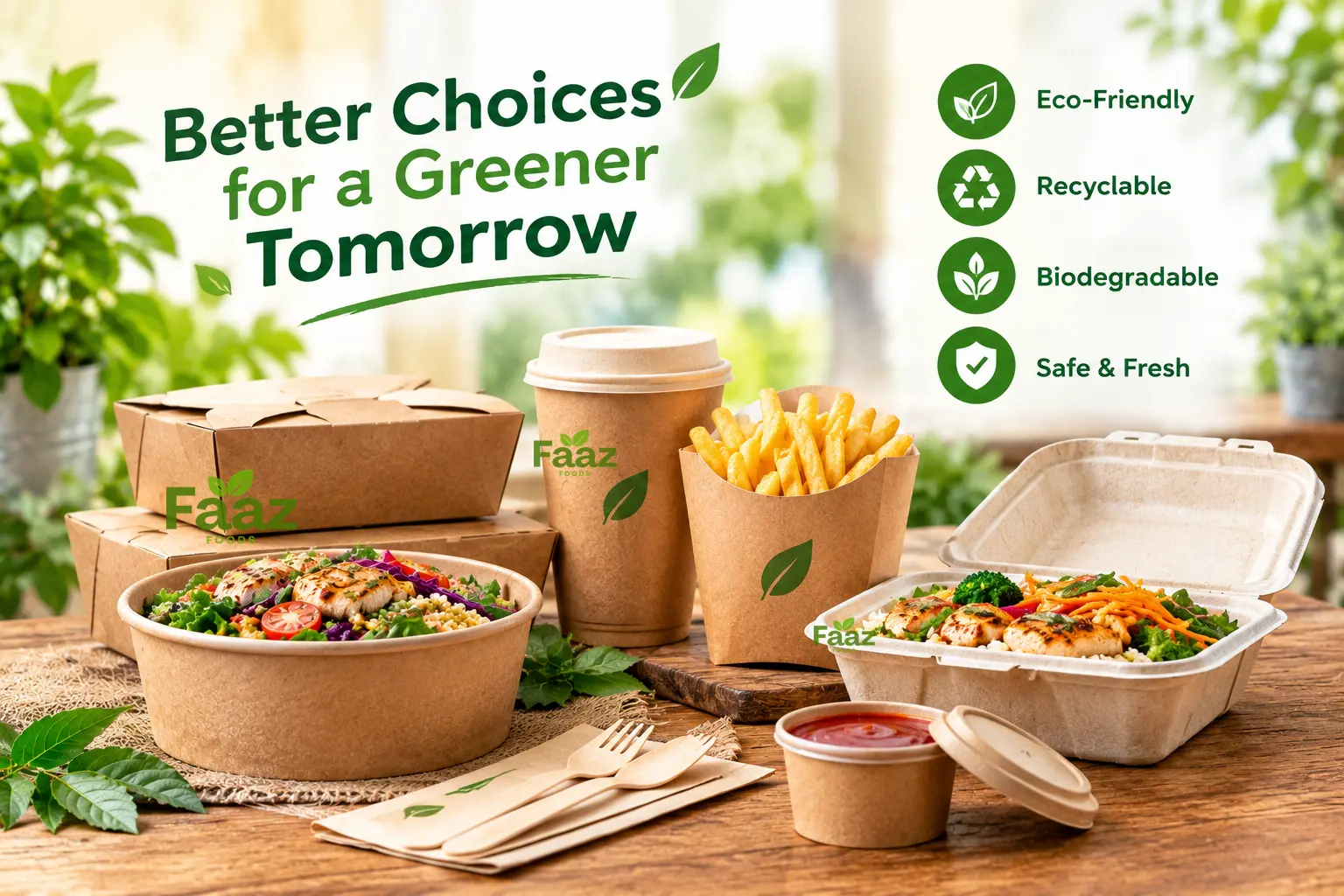
Customers notice the box their food arrives in, and the rules on single-use plastic have tightened. The labels on packaging don’t all mean the same thing, so it helps to know the difference:
- Biodegradable: breaks down naturally over time, but how fast depends on conditions.
- Compostable: breaks down in a composting process. Look for the EN13432 standard for industrial composting.
- Recyclable: can go into normal recycling if it’s clean and your council accepts it.
What Makes Food Packaging More Sustainable?
Sustainability isn’t only about the material. These points matter most:
- Renewable or recycled material: plant fibre and paper rather than fossil-based plastic.
- Less material: lighter packaging that is still strong enough for the food.
- A clear disposal route: customers and staff should know which bin it goes in.
- The right size and type: a box that protects the food means fewer spills and less waste.
- Proof behind the claim: vague labels like “green” or “eco” carry little weight, and the Green Claims Code expects environmental claims to be backed up.
Paper, Cardboard and Bagasse Options
Each material suits different food, so choose by what you serve.
- Bagasse (sugarcane fibre): copes well with hot, oily and saucy food, which is why it replaced polystyrene in many takeaways. It suits clamshells, chip trays and bowls, and breaks down in industrial composting.
- Kraft paper and cardboard: good for burger boxes, noodle boxes and carrier bags. Often recyclable when clean, but very wet dishes need a liner.
- Paper cups: double-wall cups keep hot drinks warm without a sleeve. Check whether the lining is PLA or water-based, because it affects recycling.
- PLA (plant-based plastic): looks like clear plastic and suits cold drinks. It softens with heat and needs industrial composting.
- Wooden cutlery: heat resistant and a simple replacement for banned plastic cutlery. It can often be composted at home.
Choosing Sustainable Packaging for Your Business
Use these steps to pick the right option without overspending:
- Start with your menu. Hot and saucy food needs bagasse or well-lined packaging, burgers and dry items suit kraft, and fried food needs ventilation.
- Be honest about disposal. Industrial composting isn’t available everywhere. If customers can’t compost, recyclable paper may do more good.
- Ask for proof. Request compostability certificates and food-contact safety documents, and ask about PFAS and BPA.
- Test samples first. A box that looks good on the shelf can fail after 25 minutes on a delivery run.
- Match the whole set. Cup, lid, box and bag should work together.
- Tell customers what to do. A short line such as “compost” or “recycle” saves confusion.
UK Regulations: What You Need to Know
Packaging rules keep changing, and they affect what you can buy and what you can say on your boxes. You don’t need to be an expert, but a few basics help you avoid costly mistakes. Always check the latest official guidance before you order.
- Single-use plastic ban: in England, items such as polystyrene food boxes, polystyrene cups, plastic cutlery and plastic plates can’t be supplied for ready-to-eat food. Read the official guidance on the ban for the full scope. Scotland and Wales have similar rules.
- Plastic Packaging Tax: plastic packaging with little recycled content can attract a tax. Compostable plastics such as PLA still count as plastic, while paper, bagasse and wood don’t. See the HMRC guidance to check whether it affects you.
- Producer charges: packaging costs are moving towards charging more for materials that are hard to recycle, so easy-to-recycle options such as kraft paper can work out cheaper over time.
- Green claims: words like “eco-friendly” need proof. Keep your suppliers’ certificates on file, and don’t tell customers a box is compostable if they have no way to compost it.
- BPA: this chemical is being phased out of food-contact materials. If any of your items have plastic parts or linings, ask your supplier to confirm they are BPA-free.
Frequently Asked Questions About Food Packaging
What is the best food packaging for takeaways?
It depends on what you sell. Curries and saucy food need a leak-proof box with a lid that stays shut. Sandwiches are fine in paper. Chips and wings need air holes, or they go soft. Most takeaways get by with two or three types in sizes that match their portions.
What packaging keeps takeaway food hot and fresh?
Thick walls and a tight lid do most of the work. Bagasse boxes, foil trays and double-wall cups hold heat well. Don’t seal fried food completely, because trapped steam makes it soggy, so leave a small vent. Try a sample on a real delivery run first.
What is the best packaging for curries and sauces?
Choose a container that won’t leak, with a lid that clicks shut. Bagasse and sealed tubs cope well with hot, oily food. Thin, unlined paper boxes can soak through. Leave a little room at the top, and pack extra sauce in a separate pot.
Is biodegradable food packaging better than plastic?
Sometimes, but only if it’s disposed of properly. Compostable packaging uses plant fibre and paper, but a lot of it needs industrial composting, which most customers don’t have. If they can’t compost it, recyclable paper may be the better pick. Ask your supplier for proof, not just an “eco” label.
What should I look for in food packaging suppliers?
Ask for food safety documents and proof behind any green claims. A good supplier explains what each product is made of, how to dispose of it and how fast stock arrives. Getting boxes, cups, lids and bags from one place keeps everything matched. Free samples are a good sign.
Where can I buy food packaging wholesale in the UK?
You can buy takeaway packaging wholesale from us. Browse our packaging range, or open a trade account if you order regularly. We deliver to food businesses across Birmingham, Solihull, Smethwick and the Midlands.
Conclusion
The right packaging protects your food, keeps customers happy and saves you money. Match each box to the dish, test samples on real deliveries, and choose eco options only where customers can actually dispose of them properly. When you’re ready to stock up, see our takeaway packaging range or contact Faaz Foods and we’ll help you choose.